Run faster
Speed up your run once a week, aiming to cover your usual distance in less time. After warming up, alternate 2 minutes of hard effort with 2 minutes of easy running; repeat for 2 miles. Cool down at an easy pace.
Go farther
Once a week, add a half-mile to your normal route; increase every 2 weeks until you reach 6 miles—the ideal distance for burning calories and building endurance.
Get stronger
Add 20 minutes of full-body strength training (lunges, push-ups, squats, etc.) 2 to 3 times per week to build lean muscle tissue, trim inches, and boost metabolism.
Cross-train
Once or twice a week, replace your running routine with a different activity, such as cycling, stair-climbing, or swimming. Your body won’t know what’s coming next and will have to work extra hard. Every 4 to 6 weeks, switch to a new cross-training activity.
Friday, July 17, 2009


Can exercise lower blood sugar?
A new study says "maybe."
Lifestyle habits can go a long way in controlling type 2 diabetes. A diet low in refined sugars, weight control, exercise, stress management and even adequate sleep all are recommended as part of a comprehensive approach to managing the illness. Of those, one of the most important is physical activity.
An interesting study published in the May 27, 2009, issue of the "Journal of the American Medical Association" took a look at this. The study evaluated the prevalence of heart risk factors (including blood sugar) in 504 players from 12 NFL teams who were compared with a sample of other men to see how their risk factors rated. One finding was the difference in fasting blood sugar between the two groups. Even though the NFL players weighed on average at least 60 pounds more than the men in the control group, their average fasting blood sugar was lower.
Lifestyle habits can go a long way in controlling type 2 diabetes. A diet low in refined sugars, weight control, exercise, stress management and even adequate sleep all are recommended as part of a comprehensive approach to managing the illness. Of those, one of the most important is physical activity.
An interesting study published in the May 27, 2009, issue of the "Journal of the American Medical Association" took a look at this. The study evaluated the prevalence of heart risk factors (including blood sugar) in 504 players from 12 NFL teams who were compared with a sample of other men to see how their risk factors rated. One finding was the difference in fasting blood sugar between the two groups. Even though the NFL players weighed on average at least 60 pounds more than the men in the control group, their average fasting blood sugar was lower.
Weightlifting makes life easier for the elderly
Pumping iron may beat iron pills for the elderly, suggests a review of weight-lifting studies.
In a review of 121 clinical trials that looked at weight-lifting in people over age 60, researchers led by Chiung-ju Liu of Indiana University at Indianapolis, conclude that weight lifting two to three times a week makes everyday tasks easier for the elderly.
Free weights, exercise machines or elastic "resistance" bands (their weight adjusted to the progress of the study participants) all showed benefits. They included "large improvement" in strength and "moderate to large improvement" in tasks such as climbing stairs.
In a review of 121 clinical trials that looked at weight-lifting in people over age 60, researchers led by Chiung-ju Liu of Indiana University at Indianapolis, conclude that weight lifting two to three times a week makes everyday tasks easier for the elderly.
Free weights, exercise machines or elastic "resistance" bands (their weight adjusted to the progress of the study participants) all showed benefits. They included "large improvement" in strength and "moderate to large improvement" in tasks such as climbing stairs.
Diet, smoking, exercise key in colon cancer risk
People who want to reduce their risk of colon cancer may want to start exercising more and cutting down on red meat and alcohol, a new research review suggests.
Such measures -- along with not smoking -- may be key lifestyle choices in preventing the cancer, according to the analysis, which looked at more than 100 previous studies on colon cancer risk factors.
Overall, researchers found, high intake of red and processed meats, smoking, obesity and diabetes were all linked to a 20 percent increase in the risk of colorectal cancer. In contrast, people who exercised the most had a 20 percent lower risk of the disease than their sedentary counterparts.
Type 2 diabetes is closely linked to obesity, and both can be prevented or managed through a healthy diet and physical activity -- further highlighting the importance of lifestyle choices in colon cancer risk, the researchers report in the International Journal of Cancer.
The key message is that colorectal cancer is a disease of lifestyle and that modifying inappropriate behaviors now -- such as reducing alcohol intake, quitting smoking and losing weight -- has the potential to substantially reduce a person's risk of the disease.
Such measures -- along with not smoking -- may be key lifestyle choices in preventing the cancer, according to the analysis, which looked at more than 100 previous studies on colon cancer risk factors.
Overall, researchers found, high intake of red and processed meats, smoking, obesity and diabetes were all linked to a 20 percent increase in the risk of colorectal cancer. In contrast, people who exercised the most had a 20 percent lower risk of the disease than their sedentary counterparts.
Type 2 diabetes is closely linked to obesity, and both can be prevented or managed through a healthy diet and physical activity -- further highlighting the importance of lifestyle choices in colon cancer risk, the researchers report in the International Journal of Cancer.
The key message is that colorectal cancer is a disease of lifestyle and that modifying inappropriate behaviors now -- such as reducing alcohol intake, quitting smoking and losing weight -- has the potential to substantially reduce a person's risk of the disease.
Better fitness one step at a time
When it comes to getting a good workout, you don't need to look very far. With so many workout options out there, we sometimes forget the obvious.
Climbing stairs is one of the most versatile and effective ways to work out, no matter what your fitness level.
Climbing stairs also involves all fitness components, including aerobic and anaerobic cardiovascular fitness, strength, endurance, balance, agility and co-ordination.
Try a variety of exercises-- from pushups to one-leg balance squats--on the stairs. They make an excellent training tool for the whole family.
Climbing stairs is one of the most versatile and effective ways to work out, no matter what your fitness level.
Climbing stairs also involves all fitness components, including aerobic and anaerobic cardiovascular fitness, strength, endurance, balance, agility and co-ordination.
Try a variety of exercises-- from pushups to one-leg balance squats--on the stairs. They make an excellent training tool for the whole family.
7 exercises for strong bones
Vertical machine bench press: Sit on the seat, making sure that the line of the grips is just below the chest. The bar should be an inch above the chest. Grasp the handles with an overhand grip and make sure the feet are flat on the ground. Push the lever arm straight out until your elbows are straight. Return to the starting position to complete one repetition.
Front lat pull-down: Use a locked grip (thumb around the bar) and grasp the cable bar with a wide grip. Sit with your thighs under machine support. Proceed to pull down the bar to the upper chest. Return to starting position to complete the repetition.
Horizontal leg press: Lie flat on the sled with shoulders against the pad. Place the feet on the platform, making sure they are securely on the base plate. Extend the hips and knees. Flex the hips and knees until they are just short of complete flexion and return to the starting position to complete repetition. Keep the feet flat on the platform and do not lock the knees. Use a full range of motion; keep your knees in the same direction as your feet.
Leg curl: Lying face down, grab the support handles in the front of the machine with the heels just beyond the edge of the lever pads. Lift the lever arm by flexing your knees until they are straight. Return to the starting position to complete one repetition. Keep your body on the bench and focus on moving only your legs.
Seated row machine: With your knees bent slightly and your torso leaning back slightly, grasp the handles with arms extended straight out in front of you and pull back toward your chest.
Triceps push-down: Stand in front of the high pulley station and take an overhand grasp on the bar with your elbows at your sides. Start at chest level and extend your arms down until straight and return to the starting position to complete one repetition. Position your hands above the bar prior to the push-down phase of the repetition.
Wall sit: Stand with your back facing a secure wall and your feet shoulder-width apart. The distance from the heels of your feet to the wall should equal the distance of the thigh (from the hips to the knee). Slowly lean back against the wall and continue lowering the body (flexing the knees) until your back is pressing against the wall and the legs remain in a static position not to exceed 90 degrees. Hold this position for 20 seconds (and build upward to 60-90 seconds). If a beginner, the angle of the legs might not be able to reach 90 degrees; if such is the case, lower your body to the deepest capable angle.
Front lat pull-down: Use a locked grip (thumb around the bar) and grasp the cable bar with a wide grip. Sit with your thighs under machine support. Proceed to pull down the bar to the upper chest. Return to starting position to complete the repetition.
Horizontal leg press: Lie flat on the sled with shoulders against the pad. Place the feet on the platform, making sure they are securely on the base plate. Extend the hips and knees. Flex the hips and knees until they are just short of complete flexion and return to the starting position to complete repetition. Keep the feet flat on the platform and do not lock the knees. Use a full range of motion; keep your knees in the same direction as your feet.
Leg curl: Lying face down, grab the support handles in the front of the machine with the heels just beyond the edge of the lever pads. Lift the lever arm by flexing your knees until they are straight. Return to the starting position to complete one repetition. Keep your body on the bench and focus on moving only your legs.
Seated row machine: With your knees bent slightly and your torso leaning back slightly, grasp the handles with arms extended straight out in front of you and pull back toward your chest.
Triceps push-down: Stand in front of the high pulley station and take an overhand grasp on the bar with your elbows at your sides. Start at chest level and extend your arms down until straight and return to the starting position to complete one repetition. Position your hands above the bar prior to the push-down phase of the repetition.
Wall sit: Stand with your back facing a secure wall and your feet shoulder-width apart. The distance from the heels of your feet to the wall should equal the distance of the thigh (from the hips to the knee). Slowly lean back against the wall and continue lowering the body (flexing the knees) until your back is pressing against the wall and the legs remain in a static position not to exceed 90 degrees. Hold this position for 20 seconds (and build upward to 60-90 seconds). If a beginner, the angle of the legs might not be able to reach 90 degrees; if such is the case, lower your body to the deepest capable angle.
A yoga move that boosts your energy
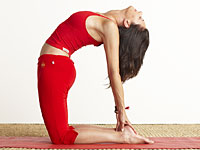 The Camel Pose yoga move. It opens your chest so your lungs are able to take in more oxygen. Plus, the act of bending backward is believed to stimulate your adrenal glands, revving you up. Do this move a few times a week—or whenever you need a little lift.
How-to: Kneel on your shins so your calves are hip-width apart and parallel to each other. Place your hands on your lower back so that your palms rest on the tops of your buttocks, your fingers are pointing up, and your elbows are hugging in. Draw your belly in and tailbone down to stabilize your lower back. Lift your chest directly up and away from the floor, tilting your head back.
If you feel comfortable, reach back and take hold of one heel with each hand (as shown), pressing down to create further lift in your chest. Stop if you feel any pressure in your lower back. Hold for 5–15 breaths, then come up smoothly by firming your belly and returning your hands to the tops of your buttocks. Sit on your heels to rest; repeat the move up to 3 times.
Fruit, vegetable intake may reduce colds
Pregnant women who consumed seven servings per day of fruits and vegetables moderately reduced risk of upper respiratory infection, U.S. researchers say.
Upper respiratory tract infections include the common cold and sinus infections, which can lead to lower respiratory problems, such as asthma or pneumonia.
Senior author Martha M. Werler of the Slone Epidemiology Center at Boston University says eating nutritious foods, especially fruits and vegetables, improves immunity but that hadn't previously been associated with reducing the risk of upper respiratory infections in pregnant women.
Upper respiratory tract infections include the common cold and sinus infections, which can lead to lower respiratory problems, such as asthma or pneumonia.
Senior author Martha M. Werler of the Slone Epidemiology Center at Boston University says eating nutritious foods, especially fruits and vegetables, improves immunity but that hadn't previously been associated with reducing the risk of upper respiratory infections in pregnant women.
7 common nutrition mistakes dieters make
- Not eating enough: Not consuming enough food, or enough of the right foods, can hinder your fat loss goals in many ways.
- Eating too much: Eating too many calories or the wrong types of food can be just as bad.
- Not eating frequently enough: I cannot emphasize how important this is going to be. Not just for metabolism, but for energy balance and to provide your body with a steady state of nutrients so that it can continue to change.
- Thinking in terms of 24-hour energy balance: What I mean by this is that just because you may need to eat 200g of carbohydrates per day, it does not mean that all your meals should contain the same number of carbs, because your body will only use what it needs at the time and store the rest. For example, you need more energy from carbs in the morning, when your body is going to be using them for energy throughout the day, than you do just before you go to bed, when you will be sleeping and storing all that energy as fat.
- Not paying attention to meal and nutrient timing: This will make a big difference in the way your body burns calories and fat.
- Not consuming enough fats: Fats are essential for the production of nearly every hormone. They are important for metabolic function, skin health, immune health and many other things. Essential fatty acids, especially omega-3 fatty acids, are largely responsible for many of these benefits.
- Not drinking enough water: And this does not mean only when you are thirsty. If you are feeling thirsty, that means you are already starting to dehydrate.
Twisting exercise can significantly relieve pain of tennis elbow
Doctors commonly treat the pain with a combination of drugs, ice packs and muscle strengthening exercises.
But now researchers claim that they have invented a novel "twisting" exercise which can significantly reduce the pain.
In fact, it proved so successful that trials were stopped early because it was considered cruel not to give the treatment to all patients.
The therapy involves rotating a small rubber tube 90 degrees while holding it with both hands and allowing only the affected elbow to become twisted.
But now researchers claim that they have invented a novel "twisting" exercise which can significantly reduce the pain.
In fact, it proved so successful that trials were stopped early because it was considered cruel not to give the treatment to all patients.
The therapy involves rotating a small rubber tube 90 degrees while holding it with both hands and allowing only the affected elbow to become twisted.
Too busy to practice yoga this summer? 4 Easy ways to stay in shape
Set small goals. Sometimes we think because we haven’t done a huge workout that the day is a waste—but that’s not true. Even doing one or two yoga postures changes your breathing pattern and energy flow. Commit to doing at least one pose a day, no matter what.
Practice early. You are more likely to do something if you do it first thing. The longer you put it off, the more time you have to make up excuses not to practice.
Practice with a friend. This is a helpful technique to get you going—and it’s way more fun. You are less likely to cancel when you know someone is counting on you.
Start each day off with a tall glass of water. Our bodies respond to the first thing that is put in them, so fill your insides with something pure after waking up. Plus, drinking a full glass of water before each meal ensures that you don’t confuse thirst for hunger.
Practice early. You are more likely to do something if you do it first thing. The longer you put it off, the more time you have to make up excuses not to practice.
Practice with a friend. This is a helpful technique to get you going—and it’s way more fun. You are less likely to cancel when you know someone is counting on you.
Start each day off with a tall glass of water. Our bodies respond to the first thing that is put in them, so fill your insides with something pure after waking up. Plus, drinking a full glass of water before each meal ensures that you don’t confuse thirst for hunger.
Thursday, July 16, 2009
Achy knees and arthritis: Why you should worry and what you can do
So what can I do to protect myself? Here are some of Dr. Theo’s tips.
Try tai chi
A new study shows that this ancient Chinese exercise, which focuses on balance and flexibility, effectively treats pain and physical impairment of people with knee osteoarthritis. In fact, any type of low-impact movement that improves balance and helps me become more aware of how I use my joints can help, including regular stretching, yoga, Pilates, and ChiWalking.
Cross-train
I shouldn’t stop running, but it might be wise for me to give my knees a rest a few days a week by switching to a low-intensity workout, such as swimming or biking. The repetitive, rotational motion of cycling has even been shown to stimulate cartilage and hyaluronic acid production.
Watch my weight
A higher-than-average body mass index may increase a person’s risk of developing osteoarthritis in the hips and knees. Scientists speculate that more pressure on the joints over time leads to faster deterioration and excess damage to the cartilage.
Eat a joint-healthy diet
There are no long-term studies that show if one diet is better than the other for arthritis prevention, but researchers believe that the Mediterranean Diet—rich in whole grains, fish, fruit, and vegetables—can help reduce arthritis-causing inflammation and provide the antioxidants I need to stay healthy.
Consider a supplement
Main recommendations for someone my age were actually omega-3 fish oil and vitamin D supplements, which can reduce inflammation and strengthen the body’s physical support system. Oral hyaluronic acid and ASU, a supplement made from avocado and soybeans, are also sometimes recommended for those at risk of osteoarthritis.
Get an expert opinion
The bottom line is, it was impossible for Dr. Theo to really tell what was going on in my knees without a complete examination to test my alignment, coordination, and joint strength—”really pulling your leg around to see how your knee responds,” he put it simply. If I keep experiencing pain or discomfort in my knees, it’s important that I see a rheumatologist for a real opinion. At this point I might not be in much danger, but ignoring the problem will only make it harder to treat in the future.
Try tai chi
A new study shows that this ancient Chinese exercise, which focuses on balance and flexibility, effectively treats pain and physical impairment of people with knee osteoarthritis. In fact, any type of low-impact movement that improves balance and helps me become more aware of how I use my joints can help, including regular stretching, yoga, Pilates, and ChiWalking.
Cross-train
I shouldn’t stop running, but it might be wise for me to give my knees a rest a few days a week by switching to a low-intensity workout, such as swimming or biking. The repetitive, rotational motion of cycling has even been shown to stimulate cartilage and hyaluronic acid production.
Watch my weight
A higher-than-average body mass index may increase a person’s risk of developing osteoarthritis in the hips and knees. Scientists speculate that more pressure on the joints over time leads to faster deterioration and excess damage to the cartilage.
Eat a joint-healthy diet
There are no long-term studies that show if one diet is better than the other for arthritis prevention, but researchers believe that the Mediterranean Diet—rich in whole grains, fish, fruit, and vegetables—can help reduce arthritis-causing inflammation and provide the antioxidants I need to stay healthy.
Consider a supplement
Main recommendations for someone my age were actually omega-3 fish oil and vitamin D supplements, which can reduce inflammation and strengthen the body’s physical support system. Oral hyaluronic acid and ASU, a supplement made from avocado and soybeans, are also sometimes recommended for those at risk of osteoarthritis.
Get an expert opinion
The bottom line is, it was impossible for Dr. Theo to really tell what was going on in my knees without a complete examination to test my alignment, coordination, and joint strength—”really pulling your leg around to see how your knee responds,” he put it simply. If I keep experiencing pain or discomfort in my knees, it’s important that I see a rheumatologist for a real opinion. At this point I might not be in much danger, but ignoring the problem will only make it harder to treat in the future.
7 summer foods you shouldn't miss: Slideshow
Corn
Nutritional punch: It’s often maligned for being starchy, but corn is a whole grain that can reduce the risk of stroke, type 2 diabetes and heart disease.
One-half cup of raw kernels, slightly less than a medium ear, is 66 calories and provides 2.1 grams of fiber. One-half cup cooked is 88 calories with 2.3 grams of fiber. Corn also contains some B vitamins, including folate, that help the body produce energy, as well as vitamin C and phosphorus.
The bran component of corn contains a cornucopia of compounds, including ferulic acid, that act as antioxidants. These potent compounds also protect the heart and help maintain your vision.
Cooking corn activates its disease-fighting compounds, studies show.
Cherries
Nutritional punch: One cup, about 17 cherries, is 87 calories and provides 2.9 grams of fiber. They’re loaded with beta-carotene, a carotenoid that turns into the usable form of vitamin A in the body and can protect your heart and vision. A one-cup serving also gives you 26 percent of the recommended daily amount of vitamin C, as well as manganese, which helps form cartilage that lays the foundation for bones and skin, and potassium, which blunts the effects of a high-sodium diet.
Cherries are most notable for their heart-healthy phytochemicals, also known as flavonoids, which can lower heart disease risk.
Preliminary animal studies have shown that cherry-enriched diets can boost immunity and reduce the risk for the flu and other respiratory infections, lower cholesterol, reduce inflammation, and reduce risk factors for type 2 diabetes.
Blueberries
Nutritional punch: One cup of raw blueberries is 84 calories and boasts 3.6 grams of fiber, specifically pectin, a soluble fiber that helps lower cholesterol and possibly protect against cancer. Blueberries are also rich in vitamin K (important for bones), manganese and the antioxidant vitamin E.
Blueberries contain anthocyanins, antioxidant pigments that give blueberries their blue hue and have been shown to promote a healthy vascular system and fight inflammation.
Okra
Nutritional punch: One cup of cooked okra packs in as much fiber as a bowl of oatmeal. One cup boiled and sliced has 35 calories, 4 grams of fiber and 3 grams of protein. “The unique combination of fiber and protein make okra particularly satiating,” says Jackson Blatner. Okra is also chock full of vitamins and minerals, including 80 percent of the daily allowance of vitamin K, as well as vitamins C and B6 (important for energy production).
Strawberries
Nutritional punch: One cup of strawberries contains 46 calories, 2.9 grams of fiber, and 50 percent more vitamin C than you need in a day. Other notable nutrients include manganese, folate (important to protect against birth defects and promote heart health), and vitamin B6, an energy booster.
Strawberries overflow with phytochemicals, including flavonoids (such as anthocyanins, antioxidants that give them their ruby red color) and ellagic acid, a phenolic compound (also found in blueberries, raspberries, and other plant foods) shown in laboratory and animal studies to have anti-cancer properties. Recent animal studies suggest that strawberries may protect and maintain your cognitive function by enhancing learning and memory in aging animals.
Eggplant
Nutritional punch: One cup cubed and cooked provides 35 calories and 2-1/2 grams of fiber. Eggplant also contains several vitamins and minerals including potassium, manganese, copper, and the B vitamins thiamin, vitamin B6 and folate.
Eggplant boasts a variety of important phytonutrients believed to have antioxidant properties. These include several compounds that may protect against cancer and microbes such as bacteria and viruses.
Recent research found an anthocyanin unique to eggplant peels that appear to protect the heart.
Tomatoes
Nutrition Perks: This fruit, which acts like a vegetable, can brag about its long list of nutrients. One cup raw (chopped or sliced) contains 32 calories
and 2.2 grams fiber. One cup cooked has 43 calories and 1.7 grams of fiber. Tomatoes are packed with almost a day’s worth of vitamin C, as well as vitamin A, beta-carotene, potassium, vitamin K, manganese, chromium and other minerals.
Cooking tomatoes unleashes lycopene, a potent phytochemical that acts as an antioxidant to ward off some cancers (including prostate cancer). Recent research suggests that lycopene may also benefit bones by reducing fracture risk.
Nutritional punch: It’s often maligned for being starchy, but corn is a whole grain that can reduce the risk of stroke, type 2 diabetes and heart disease.
One-half cup of raw kernels, slightly less than a medium ear, is 66 calories and provides 2.1 grams of fiber. One-half cup cooked is 88 calories with 2.3 grams of fiber. Corn also contains some B vitamins, including folate, that help the body produce energy, as well as vitamin C and phosphorus.
The bran component of corn contains a cornucopia of compounds, including ferulic acid, that act as antioxidants. These potent compounds also protect the heart and help maintain your vision.
Cooking corn activates its disease-fighting compounds, studies show.
Cherries
Nutritional punch: One cup, about 17 cherries, is 87 calories and provides 2.9 grams of fiber. They’re loaded with beta-carotene, a carotenoid that turns into the usable form of vitamin A in the body and can protect your heart and vision. A one-cup serving also gives you 26 percent of the recommended daily amount of vitamin C, as well as manganese, which helps form cartilage that lays the foundation for bones and skin, and potassium, which blunts the effects of a high-sodium diet.
Cherries are most notable for their heart-healthy phytochemicals, also known as flavonoids, which can lower heart disease risk.
Preliminary animal studies have shown that cherry-enriched diets can boost immunity and reduce the risk for the flu and other respiratory infections, lower cholesterol, reduce inflammation, and reduce risk factors for type 2 diabetes.
Blueberries
Nutritional punch: One cup of raw blueberries is 84 calories and boasts 3.6 grams of fiber, specifically pectin, a soluble fiber that helps lower cholesterol and possibly protect against cancer. Blueberries are also rich in vitamin K (important for bones), manganese and the antioxidant vitamin E.
Blueberries contain anthocyanins, antioxidant pigments that give blueberries their blue hue and have been shown to promote a healthy vascular system and fight inflammation.
Okra
Nutritional punch: One cup of cooked okra packs in as much fiber as a bowl of oatmeal. One cup boiled and sliced has 35 calories, 4 grams of fiber and 3 grams of protein. “The unique combination of fiber and protein make okra particularly satiating,” says Jackson Blatner. Okra is also chock full of vitamins and minerals, including 80 percent of the daily allowance of vitamin K, as well as vitamins C and B6 (important for energy production).
Strawberries
Nutritional punch: One cup of strawberries contains 46 calories, 2.9 grams of fiber, and 50 percent more vitamin C than you need in a day. Other notable nutrients include manganese, folate (important to protect against birth defects and promote heart health), and vitamin B6, an energy booster.
Strawberries overflow with phytochemicals, including flavonoids (such as anthocyanins, antioxidants that give them their ruby red color) and ellagic acid, a phenolic compound (also found in blueberries, raspberries, and other plant foods) shown in laboratory and animal studies to have anti-cancer properties. Recent animal studies suggest that strawberries may protect and maintain your cognitive function by enhancing learning and memory in aging animals.
Eggplant
Nutritional punch: One cup cubed and cooked provides 35 calories and 2-1/2 grams of fiber. Eggplant also contains several vitamins and minerals including potassium, manganese, copper, and the B vitamins thiamin, vitamin B6 and folate.
Eggplant boasts a variety of important phytonutrients believed to have antioxidant properties. These include several compounds that may protect against cancer and microbes such as bacteria and viruses.
Recent research found an anthocyanin unique to eggplant peels that appear to protect the heart.
Tomatoes
Nutrition Perks: This fruit, which acts like a vegetable, can brag about its long list of nutrients. One cup raw (chopped or sliced) contains 32 calories
and 2.2 grams fiber. One cup cooked has 43 calories and 1.7 grams of fiber. Tomatoes are packed with almost a day’s worth of vitamin C, as well as vitamin A, beta-carotene, potassium, vitamin K, manganese, chromium and other minerals.
Cooking tomatoes unleashes lycopene, a potent phytochemical that acts as an antioxidant to ward off some cancers (including prostate cancer). Recent research suggests that lycopene may also benefit bones by reducing fracture risk.
The secret to great sex? It's not technique: study
Great sex isn't about technique or buff bodies.
Intense physical sensation, orgasm, lust and chemistry also don't have much to do with it. Instead, a new study, says great sex is more about connection and focus.
The study found that great sex involves the following eight components:
* Being present
* Connection
* Deep sexual and erotic intimacy
* Extraordinary communication
* Interpersonal risk taking and exploration
* Authenticity
* Vulnerability
* Transcendence
Of all the components, "being present, focused and embodied" was cited the most by participants.
Intense physical sensation, orgasm, lust and chemistry also don't have much to do with it. Instead, a new study, says great sex is more about connection and focus.
The study found that great sex involves the following eight components:
* Being present
* Connection
* Deep sexual and erotic intimacy
* Extraordinary communication
* Interpersonal risk taking and exploration
* Authenticity
* Vulnerability
* Transcendence
Of all the components, "being present, focused and embodied" was cited the most by participants.
An easy upper-body stretch
 Here's an easy stretch that feels great after an upper-body workout -- or any time your shoulders and back feel tight. Remember to keep your hips raised for maximum benefit.
1 Begin on all fours on a padded, level surface. Place your hands under your shoulders with your feet and knees hip-width apart.
2 Raise your heels and point your toes to the floor. Slowly bend your right elbow and place your right forearm on the floor under you. Reach your left arm forward as far as you can. Keep your hips raised directly above your knees (don't sit back). Now press the left palm of your hand into the floor as you increase the stretch in the left side of your back, shoulder and chest. Hold this position for two seconds. Come back to all fours and repeat on the other side.
Subscribe to:
Posts (Atom)